Partnership creates new caddie opportunities
GLENVIEW, Ill. – The Western Golf Association is working with Aspire Higher to create new caddie opportunities for students in Detroit and Pontiac, helping young people build life skills, develop meaningful relationships and work toward the life-changing opportunity of the Evans Scholarship.
Founded in 2021 at Oakland Hills Country Club by Scott Wilson, Kimberly Shapiro and Jack Lintol, the Aspire Higher Program provides deserving young men and women the opportunity to caddie at two of Michigan's premier clubs: Oakland Hills, where the program began, and the Country Club of Detroit, where a sister program later launched. Through mentorship and on-course experience, participants are introduced to the game of golf and given a pathway toward the Evans Scholarship, a full-tuition, housing scholarship for high-achieving caddies.
Aspire Higher recruits students from Pontiac International Technology Academy and Notre Dame Preparatory School’s Building Bridges program, selecting participants based on character, commitment, financial need, and academic ability. The Country Club of Detroit program recruits students from Cass Technical High School and Renaissance High School in Detroit.
The program grew out of a goal to build on the strong walking culture at Oakland Hills and increase the number of Evans Scholars from the club by recruiting talented, hard-working students who had the potential to succeed but lacked access to golf, transportation and the support needed to get started. Aspire Higher removes those barriers directly by providing caddie attire through Oakland Hills, operating a bus service six days a week during the summer, offering post-round lunches and delivering hands-on caddie training.
“For these students, Aspire Higher is their first introduction to golf and caddying,” said Scott Wilson, founder of Aspire Higher. “Our goal is to provide the support they need to get started, stay involved, and understand the opportunities that can come from hard work on and off the golf course. The Evans Scholarship can change the trajectory of a young person’s life, and we are proud to help more students see that path.”
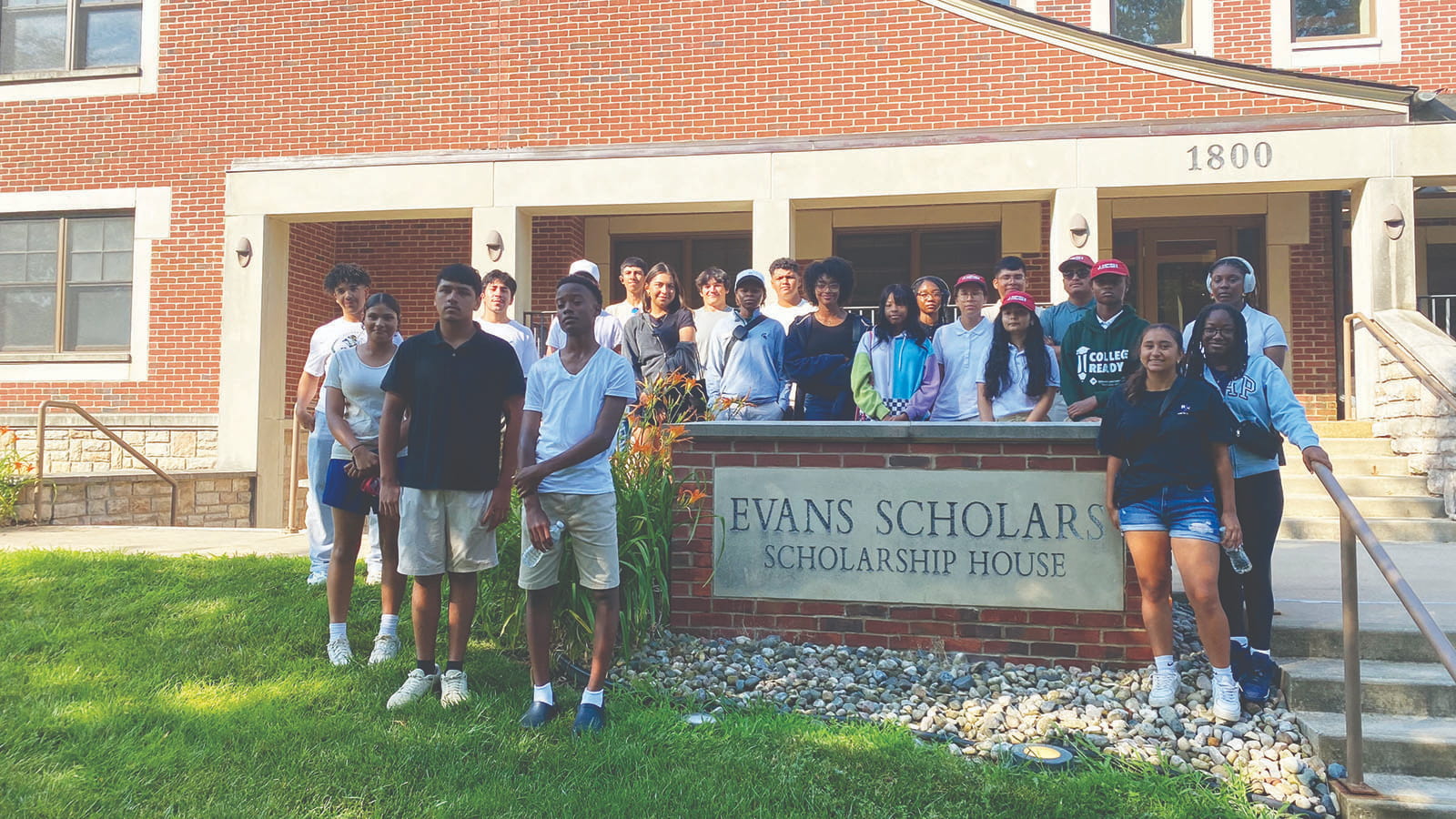
That support takes many forms. The program broadens students' horizons with experiences many have never had, including an annual college visit and tour at the University of Michigan or Michigan State University, both partner schools of the Evans Scholars Foundation, and the opportunity to attend the PGA Tour's Rocket Mortgage Classic. Students also visit Royal Oak Golf Center, where they learn more about the game through time on the driving range and miniature golf.
Participants at Oakland Hills also wear red Aspire Higher hats so members know they are part of the program. The hats represent a goal: Oakland Hills Evans Scholars wear red bibs, and the program encourages students to progress from the red hat to the red bib. The students who succeed, Wilson said, share a positive attitude and a willingness to learn and accept feedback. At its heart, Aspire Higher is not a summer jobs program but a community of academically focused, high-character students working toward the Evans Scholarship.
This year, Aspire Higher has 36 participants. Through the program, students from Detroit and Pontiac receive transportation, caddie clothing, mentoring and hands-on caddie experience at two of the leading golf clubs in Michigan.
Since the program's founding, 14 Aspire Higher participants have earned the Evans Scholarship, including two awarded this past year: Diego Olguin of Pontiac, Michigan, who will attend Michigan State University, and Harmoni Erving-Spencer of Detroit, Michigan, who will attend the University of Michigan.
The Evans Scholarship is valued at more than $125,000 over four years. Currently, a record 1,260 Evans Scholars are enrolled at 27 leading universities nationwide. This year, the WGA awarded a record 380 new Evans Scholarships, the largest single class in the Program's history.
Evans Scholars have a cumulative GPA of 3.3 and a 98 percent graduation rate. An estimated 40 percent are first-generation college students, and 96 percent are employed or enrolled in graduate school within six months of graduating.